IIT Bombay: AI Innovation Lab

A world-class hub for advanced AI-led research, innovation, and talent development.

Optiver AI Lab at IIT Bombay

Lab Objective

"To establish a world-class Finance Lab at IIT Bombay that will drive advanced AI-led research, innovation, and talent development in financial services, build cutting-edge data infrastructure, and position the institute as a global leader in shaping the AI enabled finance ecosystem"

The Facility

The Lab will feature a dedicated 2,000 sq. ft facility equipped with high-performance computing servers, research terminals, and collaborative spaces to enable cutting-edge finance research.

15 Workstations
High Power GPU's & Servers

Infrastructure & Assets

Terminals & Data

  • Bloomberg Terminals, Refinitiv Eikon,
  • Real time data from NSE Data & Analytics Limited, Mutual Fund Ratings and Ranks, ESG Ratings, etc.

Software Subscriptions

Subscriptions for SPSS, SAS, R, Mathematica, MATLAB, Stata, etc.

Hardware

15 workstations with sufficient processing power. Hardware GPU's and servers.
Current Research Themes: Banking, Financial and Insurance Services - Aligned but Cross-Vertical

Learning from Sparse, Skewed, or Irregular Data

Foundation Models for Tabular & Time-Series Data

AI for Real-Time Learning and Fast Decision-Making

Data Quality, Metadata Intelligence & Drift Correction

Inviting Research Proposals

Banking, Financial and Insurance Services - Aligned but Cross-Vertical

Average Budget

₹10 Lakhs - ₹15 Lakhs

Submission Deadline

23/01/2026

1 Learning from Sparse, Skewed, or Irregular Data

1.1 Sparse event sequences

Develop ML models that can learn from long gaps between events, e.g., customers who transact infrequently or rarely generate fraud signals.

1.2 Few-shot / zero-shot learning for risk prediction

Design models that can generalize from very few labeled examples, especially for rare categories like new customer segments or new fraud types.

1.3 Handling missing features in multimodal financial data

Learn robust models when key attributes (documents, demographics, behavioural features) are missing, noisy, or incomplete.

1.4 Generative reconstruction of sparse datasets

Use diffusion models/GANs to reconstruct dense representations from sparse financial records to improve prediction robustness.

1.5 Learning under extreme class imbalance

Methods to handle datasets where positive cases (fraud, NPA, claims rejection) are <1%, without overfitting or ignoring minority classes.

2 Foundation Models for Tabular & Time-Series Data

2.1 Transformer architectures for transaction logs

Build efficient model architectures specifically for high-frequency financial transactions.

2.2 Pretrained financial embeddings

Create universal embedding layers for structured financial data, similar to BERT but for tabular and temporal datasets.

2.3 Cross-industry temporal foundation models

One model adaptable to credit, insurance, retail, healthcare without retraining from scratch.

2.4 Multimodal fusion (text + time series + images)

Joint modelling of contracts (text), claims/transactions (time series), and KYC documents (images).

2.5 SAM-like segmentation for tabular data

Data-driven segmentation for automatically grouping customers or transactions in a foundation model.

3 AI for Real-Time Learning and Fast Decision-Making

3.1 Online learning with concept drift

Models that continuously update themselves as new data arrives, without full retraining.

3.2 Ultra-low-latency inference

Techniques and architectures designed for fraud detection or algo trading, where milliseconds matter.

3.3 Reinforcement learning for credit strategies

Dynamic adjustment of credit limits, pricing, or collection effort using RL agents.

3.4 Graph stream analytics

Real-time detection of emerging fraud rings or unusual transaction flows.

4 Data Quality, Metadata Intelligence & Drift Correction

4.1 Metadata-driven feature discovery

AI systems that automatically uncover relationships between fields across large databases.

4.2 Automated data quality checks

Models that detect anomalies, missing values, and inconsistencies with minimal supervision.

4.3 Dynamic feature engineering

Feature pipelines that rewrite themselves as underlying data changes.

Ready to submit?

Submit your research ideas, objectives, and scope of work using the form below.

Go to Google Form
Upcoming Event

National Symposium
on AI Innovations in BFSI Services

National Symposium on AI Innovations in BFSI

Explore the full symposium experience featuring industry titans, academic leaders, and cutting-edge research presentations.

View Symposium

Organized by AI Innovation Lab × IIT Bombay × Optiver

Academic Programs

Educational initiatives at the intersection of AI and Finance

Advanced research opportunities for Ph.D. students in AI in BFSI Services

The Lab supports highly motivated Ph.D. students in the mentioned areas, assistantship is as per rule of IIT Bombay for Ph.D. scholars.

The Benefits

1

Funding

The fellowship covers tuition, research related expenses, and living costs

2

Annual Research Grants

To cover research related expenses and conference travel.

3

Professional Development

Access to workshops, seminars, and support from industry leaders.

4

Mentorship

Guidance from experienced faculty members and industry professionals

Eligibility Requirement (At least one)

Indian Candidates

  • Four year Bachelor in any discipline with 60% marks/6.5 CPI (55%/6.0 CPI for SC/ST) and at least two years work experience.
  • Master in any discipline (MBA/M.Tech./M.S./M.Sc./M.A./M.Com./MCA/LLM/M.Pharm./M.Phil., etc.) or 2 year PG Diploma in Management from institutions/universities
  • Executive MBA of at least one year duration from IITs/IIMs
  • CA/CMA/CS with 60%/6.5 CPI (55%/6.0 CPI for SC/ST) in the preceding degree/Bachelor's (B.Sc./B.Com./BA)

Foreign Candidates

  • Four year Bachelor degree with 60% marks or 6.5 CPI and two years work experience OR Masters in any discipline with 60% marks or 6.5 CPI
  • The Candidate should have valid TOEFL score

Research Proposal

A detailed research proposal covering introduction, literature review, research gaps, research objectives/ questions / hypotheses, research design (variables, data, period, methodology, etc.) should be submitted along with the application.

Applications without research proposal will not be considered.

Research Interest

A demonstrated interest or experience in quantitative finance, or related areas is desirable

Post-Doctoral Research

Post-Doctoral fellowships are available in IITB-Optiver Innovation Lab. The tenure of Post-Doctoral Fellows (PDF) would be generally for two years (initially for one year and extendable for another year, subject to a satisfactory academic performance in the 1st year). There is a possibility for extension for the third year in exceptional cases.

Program Benefits

  • Non-lapsable contingency grant of Rs. 1,00,000/- per annum.
  • Consolidated salary of Rs. 80,000/- per month with HRA as per Government of India norms (currently 27% of consolidated salary).

Eligibility & Evaluation

  • Candidates who wish to be considered for such an appointment may be fresh PhDs or PhDs with less than two years of experience or research scholars who have submitted their thesis and are awaiting examination.
  • Candidates should be preferably below 32 years of age.
  • Academic units will evaluate these applications through a process similar to that of faculty selections.
  • The Search Committees meet regularly to consider the applications and arrange for invited seminars and/or interviews as the need arises.
  • There is no last date for applications

Duties and Facilities

  • A PDF will have a mentor whose area is closest to that of the PDF.
  • In addition to research, the Head of the Academic units may assign reasonable academic/administrative tasks depending on the need.
  • Financial support is provided for one international conference during the tenure of the fellowship for the presentation of their research work done at IIT Bombay.
  • Support for one national conference per year is also provided.

Our People

Leadership and Expertise

Advisory Board

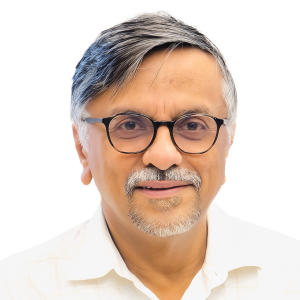
Prof. S.V.D. Nageswara Rao

Prof. S.V.D. Nageswara Rao

Professor and Head, Shailesh J. Mehta School of Management, IIT Bombay

As Head of Shailesh J. Mehta School of Management, he played a pivotal role in setting up the lab and establishing a strong foundation for cutting-edge research and innovation in finance. He helped foster collaborations between academia and industry, and enabled the lab to become a hub for advanced quantitative finance and data-driven problem solving.

He received the doctoral title of Fellow of IIM Ahmedabad and served a Senior Manager of ICRA Ltd., New Delhi. He is former Chairman of Metropolitan Stock Exchange of India, and also served as Independent Director on the boards of other companies.

He was a consultant to leading companies/organizations like ICRA, L&T, Ashok Leyland, CBI, Traco Cables Company Ltd., MERC, and Power Exchange India Ltd. (PXIL). His areas of research interest include Corporate Finance, Investment Banking, Capital Markets, Mutual Funds, Corporate Governance, Financial Engineering, ESG Investing, and Corporate Social Responsibility.

He has guided 21 Ph.D. scholars, 46 Masters dissertations, and currently guiding 6 Ph.D. students. He has Presented papers at national and international conferences, and published in reputed journals. He has conducted more than 40 short and long duration Management Development Programmes (MDPs) for executives from different companies, and senior government officials.

Prof. D. Manjunath

Prof. D. Manjunath

Head, Centre for Machine Intelligence and Data Science (CMInDS), IIT Bombay

Prof. D. Manjunath is the Head of the Centre for Machine Intelligence and Data Science (CMInDS) at IIT Bombay. A founding member of the CMInDS Steering Committee, he has played a key role in shaping the Centre’s vision since its inception. He is a Professor in the Department of Electrical Engineering and has been a faculty member at IIT Bombay since 1998. He served as an Institute Chair Professor from 2014 to 2021.

His research interests include communication networks, queueing systems, stochastic modeling, network economics, and distributed systems. He has published over 100 papers in leading international journals and conferences and is the co-author of a widely used graduate-level textbook—Communication Networking: An Analytical Approach and Wireless Networking.

Prof. Manjunath has held visiting positions at several prominent academic and research institutions, including the University of Toronto, Microsoft Research Cambridge, University of Waterloo, University of Bristol, and Ohio State University.

Beyond academia, he is actively engaged in national technology and policy initiatives. He currently serves on the boards of the National Payments Corporation of India (NPCI), the Clearing Corporation of India Ltd. (CCIL), and the Bombay Stock Exchange (BSE). He has also been a consultant to the Telecom Regulatory Authority of India (TRAI) and serves on multiple national advisory committees focused on digital infrastructure and data governance.

Prof. Rajendra Sonar

Prof. Rajendra Sonar

Professor-in-Charge, AI Innovation Lab (Optiver Lab)

Prof Rajendra Sonar is Professor of Information Systems and Technology at SJMSOM, IIT Bombay. Prof. Sonar has more than 32 years of mixed experience: software development, training, teaching, entrepreneurship, research and consulting.

He is more of hands-on person having fair amount of knowledge, skills and hands-on experience on various programming languages right from C to Python, database systems, frameworks and tools. Did his first AI subject in 1992 as part of Master’s degree in CS and has been working on applied AI since 1996.

Founded his first AI startup iKen Solutions at SINE, IIT Bombay in 2005. He holds bachelor’s, master’s and Ph.D. degrees in Computer Science. His research interests include Applied AI, intelligent systems (hybrid AI: integrating expert system, artificial neural networks, case-based reasoning and genetic algorithms and applying them to solve business problems), N=1 analytics, hyper personalization using AI.

Has guided several PhD students and has published several papers in international journals and conferences and a book on his topics of interest.

Executive Committee

Prof. Piyush Pandey

Prof. Piyush Pandey

Assistant Professor, Shailesh J. Mehta School of Management, IIT Bombay

Piyush Pandey is an Assistant Professor in the area of Finance. His research and teaching interests include Financial Derivatives, Investment Management and Banking.

Prior to joining SJMSOM, he worked as an Assistant Professor of Finance in FORE School of Management, Delhi for around 1.5 years. After his post graduation (Masters in Finance & Control) from Department of Financial Studies, Delhi University, he worked for 2 years in UBS ISC (now acquired by Cognizant Technology Solutions) in Equity Research and Fixed Income Structuring roles.

He had qualified the UGC NET exam and was awarded JRF in management to pursue doctoral research. During his doctoral programme, he had the privilege to present his research papers in many prestigious international and domestic finance conferences. He has published his research work in peer reviewed economics and finance journals of international repute (affiliated to Springer, Elsevier, Taylor & Francis, Emerald).

He worked as a Senior Research Fellow on an ICSSR, Govt. of India, sponsored major research project entitled “Financial Integration in the South Asian region- An Empirical Study”. He has published a book titled “Economic and Financial Integration in South Asia: A Contemporary Perspective” with his co-authors in Routledge, Taylor & Francis Group. He is also actively involved in corporate consulting having consulted JLLSFG on a real estate finance project and a wealth management firm on profitable investment strategies.

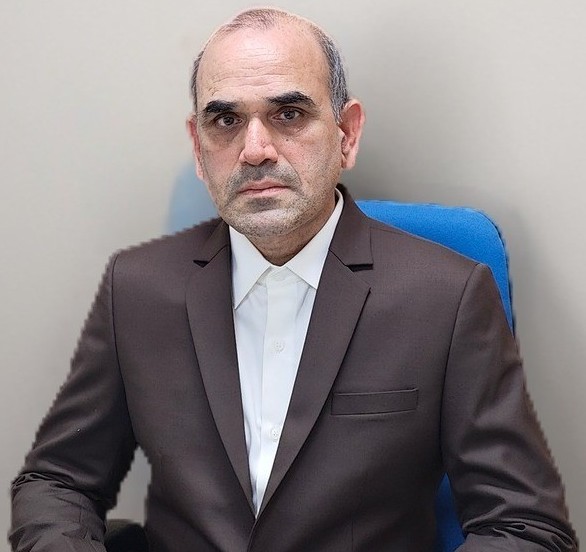
Prof. Pratik Jawanpuria

Prof. Pratik Jawanpuria

Associate Professor, Centre for Machine Intelligence and Data Science (C-MInDS), IIT Bombay

Prof. Pratik Jawanpuria's research focuses on the intersection of machine learning and non-linear optimization. He received his B.Tech in Computer Science and Engineering and his Ph.D. degrees from the IIT Bombay in 2009 and 2014, respectively.

After completing his Ph.D., Pratik undertook postdoctoral research at Saarland University before transitioning to industry. At Amazon, he was a part of the India Machine Learning team in Bengaluru, where he worked on problems in the retail domain, including competitive price prediction and style/product recommendation.

Prior to joining C-MInDS, he served as a Principal Applied Scientist at Microsoft (Office India Intelligence team), where he developed AI/ML solutions for a range of products, including Office Lens, Kaizala, Microsoft 365, and Copilot.

The AI Innovation Lab is a collaborative effort between IIT Bombay's top faculty and Optiver's leading researchers. We are constantly expanding our team of visionary thinkers.

Contact Us

Get in touch with the AI Innovation Lab team

Send a Message